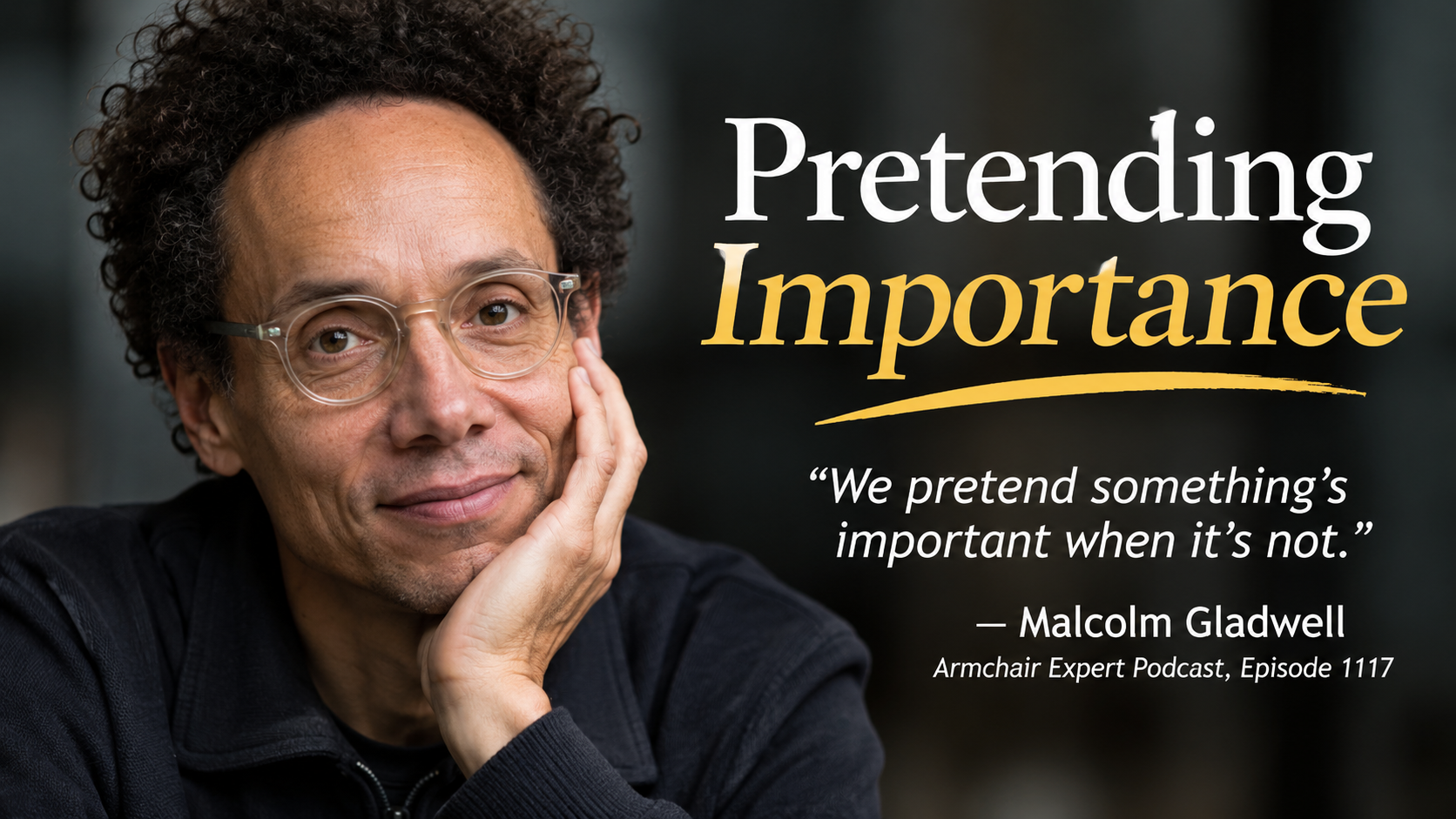
“We pretend something’s important when it’s not.”
— Malcolm Gladwell, Armchair Expert Podcast, Episode 1117
I was fascinated by Dax Shepard’s recent interview with Malcolm Gladwell. I am a big fan of Mr. Gladwell’s writing (as well as developing a growing respect for Dax Shepard), and over the years, I’ve become a big fan of Gladwell as a human being. He’s logical, insightful, thoughtful, honest and courageous. Those are some of the characteristics that attract me most to people.
It’s rare when I’m listening to a podcast that I stop and rewind to listen again…mostly because I’m usually driving or on an elliptical machine while listening. During this episode, I must have stopped and rewound five or six times.
There were so many facts and historical perspectives about violence in our country, particularly surrounding the Second Amendment, that I had never heard before or that simply made me rethink things in a completely profound way.
Regardless of where you stand on the Second Amendment, I encourage you to listen to Mr. Gladwell’s history lesson. I think you’ll find yourself questioning some of what we’ve always believed about the Constitution and our Founding Fathers.
But I digress.
I don’t want this week’s message to be political in any way. I just enjoy sharing good knowledge when I think it can help a lot of people.
Anyway, during the interview, Mr. Gladwell made a point about a completely different topic and said:
“We pretend something’s important when it’s not.”
The bluntness of that statement made me pause my workout and do a quick examination of my values, my non-negotiables, and all the things in my life that can get my blood boiling (which, thankfully, happens less and less as I get older).
Look at the internet, the news, movies and reality TV. We are inundated with ideas and opinions presented as “hot topics.” Things we are supposed to take seriously. Things we are supposed to be upset about. Things we are told should matter.
But do they?
Recruiting, and a teenager’s pursuit of the college athletics experience, is full of these “somethings” that too many of us deem important when, in the bigger picture, they really aren’t important at all.
For instance, here are some NCAA estimates of draft-eligible college athletes selected by major professional leagues in recent drafts that help illustrate my point:
- Baseball: 9,240 draft-eligible NCAA players. 452 drafted (4.9%).
- Men’s Basketball: 4,359 draft-eligible NCAA players. 43 drafted (1.0%).
- Women’s Basketball: 3,738 draft-eligible NCAA players. 30 drafted (0.8%).
- Football: 18,621 draft-eligible NCAA players. 257 drafted (1.4%).
These figures measure draft selections, not every athlete who eventually signs a professional contract, including those who play overseas.
And yet, we continue to make decisions about our children’s happiness, education, relationships and futures as if becoming a professional athlete is the ultimate prize.
Oftentimes, as athletes, and I think much, much more as parents, we dream of our kid being the one.
The one who dominates high school, gets the scholarship money, dominates college, and then changes their life (and ours) forever by becoming a professional athlete.
You can tell me you don’t think about those things or think that way.
Sure. I believe you.
But what happens when your daughter wins that Tournament MVP Award? Or your son breaks a school record that’s stood for 30 years? Or the Alabama Football staff reaches out with a phone call expressing interest?
Do you still not let your mind wander into the land of “WHAT IF?”
That sly smile that just popped up on your face makes me think you may not believe yourself.
I also believe we put too much importance on the high school, the travel team, the college conference, or the history of a college athletics program.
Schools change coaches, Presidents and Board Members all the time. Those changes affect budgets, relationships, priorities and the ability to maintain the status quo. It takes one bad article in the news for a university’s reputation to be damaged in less than 24 hours.
The things we put so much stock in today may look completely different tomorrow.
I’ve spent most of my adult life around college athletics, and I’ve watched families put an enormous amount of importance on the name of a school, the level of competition, the scholarship amount or the reputation of a coach. And I’ve watched some of those same families discover, sometimes painfully, that none of those things guaranteed their kid would be happy, grow as a person or have a meaningful college experience.
So what is important?
I do believe good coaching is important.
I think a coach who is a master teacher, relationship builder, evaluator and motivator can take a traditionally weak program and turn it into a dynamic powerhouse in a year’s time.
Those guys and gals are out there at every level, though, and I do mean EVERY level. There are more of them than you think. And even the best of them have bad years sometimes.
I think a strong university endowment is important.
It can tell us something about the financial health and long-term stability of an institution, especially at a time when more colleges are struggling to keep their doors open. It can also provide resources to attract outstanding coaches, professors and staff, and invest in the state-of-the-art facilities we all hope to experience.
I think how you are treated is important.
From that first text or email to the campus visit, and through the weeks and months after you commit and sign your financial aid or scholarship package.
Are you treated with consistent respect? Are people genuinely interested in you, or only interested in what you can do for them? Do their words match their actions?
Good people usually treat everyone with respect all the time, not just some of the time.
A leopard doesn’t change its spots, no matter the season.
I think how kids progress every day, every week, every month and every season is important.
This is why college coaches like to see who you are as a Freshman or Sophomore.
Okay, you’re pretty good now. But what will you do with your time over the next few years?
Will I consistently see growth in your skill, confidence, communication, strength, speed and quickness?
Will I find myself in awe, as a college coach, of how much more mature you become with every new conversation?
I think those things are very important.
I think how supportive a parent is behind the scenes during the recruiting journey is important.
The best recruiting parents walk side by side with their student. They understand when to take a step back, when to speak up, when to ask the right questions, and when to just listen and take notes for future conversations.
The behind-the-scenes parent is always available when needed, but they know that, in the end, this is all about their kid.
And really, I’m sorry, it has nothing to do with them.
And finally, I think the results of sports, in the whole context of this blog, are really not that important.
Don’t misunderstand me. I believe sports can be one of the greatest teaching tools we have. But we put way too much gravity on the wins, losses, rankings and scholarships, and too little on the true reasons we play in the first place.
Health and exercise. Teamwork. Personal growth and development. Relationships. And the joy and happiness that sports should provide us when we decide to play.
We get so caught up in scholarships, rankings, championships, conferences, playing time and professional dreams that we sometimes forget why we started playing in the first place.
And when those things become more important than the people involved, I think we’ve lost our way.
Mr. Gladwell is truly a smart man. I’m grateful that he made me think so deeply about these things. His simple statement gave me another opportunity to examine what I value, what deserves my attention, and what really matters in my knight-errant quest for significance.
I’ve spent my life teaching young people to control what they can control, to keep growing, and to focus on what truly matters. Maybe I need to remind myself of those same lessons a little more often.
Maybe the next time we find ourselves getting worked up over a ranking, a scholarship offer, a big win or a big loss, a coaching decision or the name on the front of a jersey, we should ask ourselves one simple question:
Is this really important, or am I just pretending it is?
I hope it made you think, too.
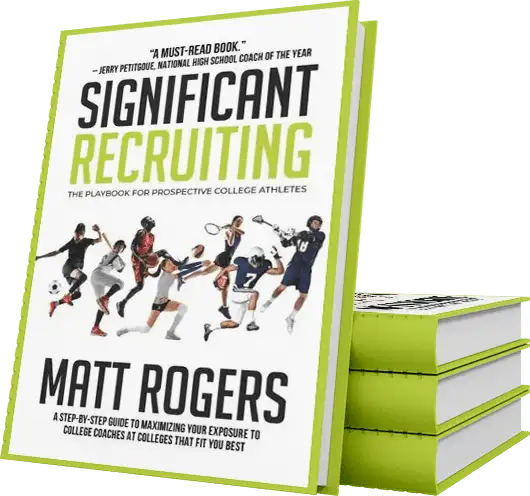
If you want to keep learning about the college recruiting process, I invite you to follow my Facebook page, @recruitcoach4U, where I’ll be sharing all the latest podcasts, blogs, recruiting advice and resources from coachmattrogers.com.
Starting in November, I’ll also be hosting 20-minute college recruiting webinars followed by live Q&A sessions, giving athletes and parents an opportunity to learn, ask questions and better understand their recruiting journey.
I hope you’ll join me, invite other families, and continue the conversation!