“I used to believe, I still do, that if you give something your all it doesn’t matter if you win or lose, as long as you’ve risked everything – put everything out there.” – Bill Chapel from “For the Love of the Game”
I’ve always considered myself a good evaluator of talent. If I’m standing on a basketball court watching twenty teenagers run up and down, it takes me about two minutes to figure out who has the ability to play at the next level. That part hasn’t changed. What has changed is my ability to evaluate the baggage that now comes with that talent.
In this new age of social media, NIL deals, and personal branding, an athlete’s skill, heart, and ability to be a great teammate often mean less than they used to. What’s replaced them is image. A polished highlight reel now carries more weight than a tough practice. A new follower can feel more important than a new skill. And too many young athletes are quick to say, “I’m not having fun anymore” the moment things get uncomfortable.
Here’s the truth: too much weight goes into fun.
Ask any successful person—whether an athlete, artist, or entrepreneur—if they loved every step of their journey. They’ll laugh. Then they’ll tell you stories about the struggle, the doubt, the grind, and how every ounce of pain was worth it. And when you ask why they kept going, you’ll almost always hear some version of the same line: “Because I love what I do, and I wasn’t going to let anything stop me.”
That’s what’s missing today. Love of the game used to mean you showed up when it was hard. You practiced when no one was watching. You ran extra because your team needed you to. Now, too often, love of the game means as long as it’s easy, as long as it’s fun, as long as I’m getting attention.
So whenever I sit down with a new athlete, I listen carefully. I’m no longer just evaluating talent—I’m evaluating truth.
Do they really love the game?
Or do they love what the game gives them?
And while it’s not my job to decide why someone wants to play in college, but if they want to work with me—if I’m going to make calls to college coaches and put my reputation behind them—I want to understand their heart first. Because if they don’t have the heart for it, none of the rest will matter.
So why write this?
Because I hope parents start expecting more from their kids again. I hope they celebrate the coach who challenges their child, who yells when effort slips, who demands maturity and accountability. I hope they stop fearing hard things and start realizing that the real joy of sports comes through adversity, not in avoiding it.
Maybe that’s naïve. Maybe I do live in a bit of a fantasy land. But I still get inspired watching a team that’s disciplined, selfless, and connected. When I see players who sacrifice for each other and work toward a common goal, I’m drawn in. When I see the opposite—selfish play, showboating, me-first behavior—I turn the TV off.
I was never a fan of professional wrestling. Maybe it’s because I could never get excited about something when the outcome was already decided. But that’s what some of our games are starting to feel like—scripted, shallow, more performance than purpose. And the more sports drift that direction, the more likely I am to find a good book to read instead.
At the end of the day, the love of the game isn’t measured by likes, stats, or scholarship offers. It’s measured by how much of yourself you’re willing to give when nobody’s watching.
If you’re a parent, talk to your child about what it really means to love the game.
If you’re a coach, remind your team that love shows up most on the hard days.
And if you’re a player, remember this: someday, the lights will fade, the uniform will come off, and all that will remain is whether you learned to give your best—not for applause, but for love.
That’s the kind of game worth playing.
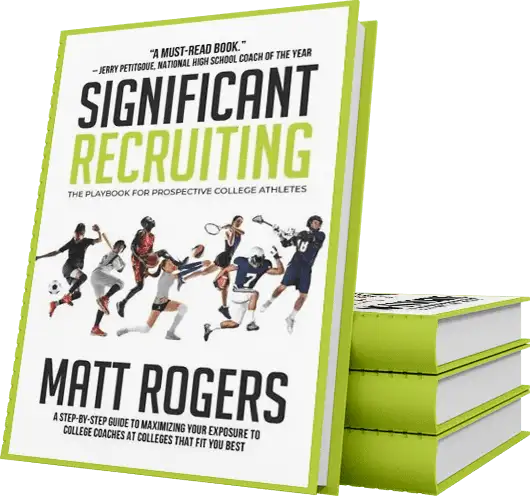
If you’re a parent or a coach who wants to put these ideas into action—building athletes who love the game for the right reasons, and programs built on heart, humility, and hard work—I’d love to connect. You can schedule a conversation with me at CoachMattRogers.com to explore how we can help your athletes rediscover what it truly means to play for the love of the game.