“The delicate balance of mentoring someone is not creating them in your own image, but giving them the opportunity to create themselves.” -Steven Spielberg
It’s been a full month on my end—not just guiding a dozen athletes through their recruiting journey and helping a small college build their first Athletic Department, but also mentoring four coaches working toward becoming head college coaches. One of them just accepted a great offer this week. I am so proud of them, and so excited to see the great work they will do.
What stands out even more?
Every one of those coaches made the first move.
They reached out. They didn’t wait for the perfect timing or the perfect introduction. They simply said, “I want to get better,” and they were willing to have a real conversation about where they are and where they want to go.
That mindset is the separator.
It showed up again this week when a college Athletic Director reached out to start a coaching conversation. This AD was already nationally decorated as one of the best in the country at what they do. They didn’t assume they had to figure it out on their own. They took ownership of their growth.
And that’s the common thread.
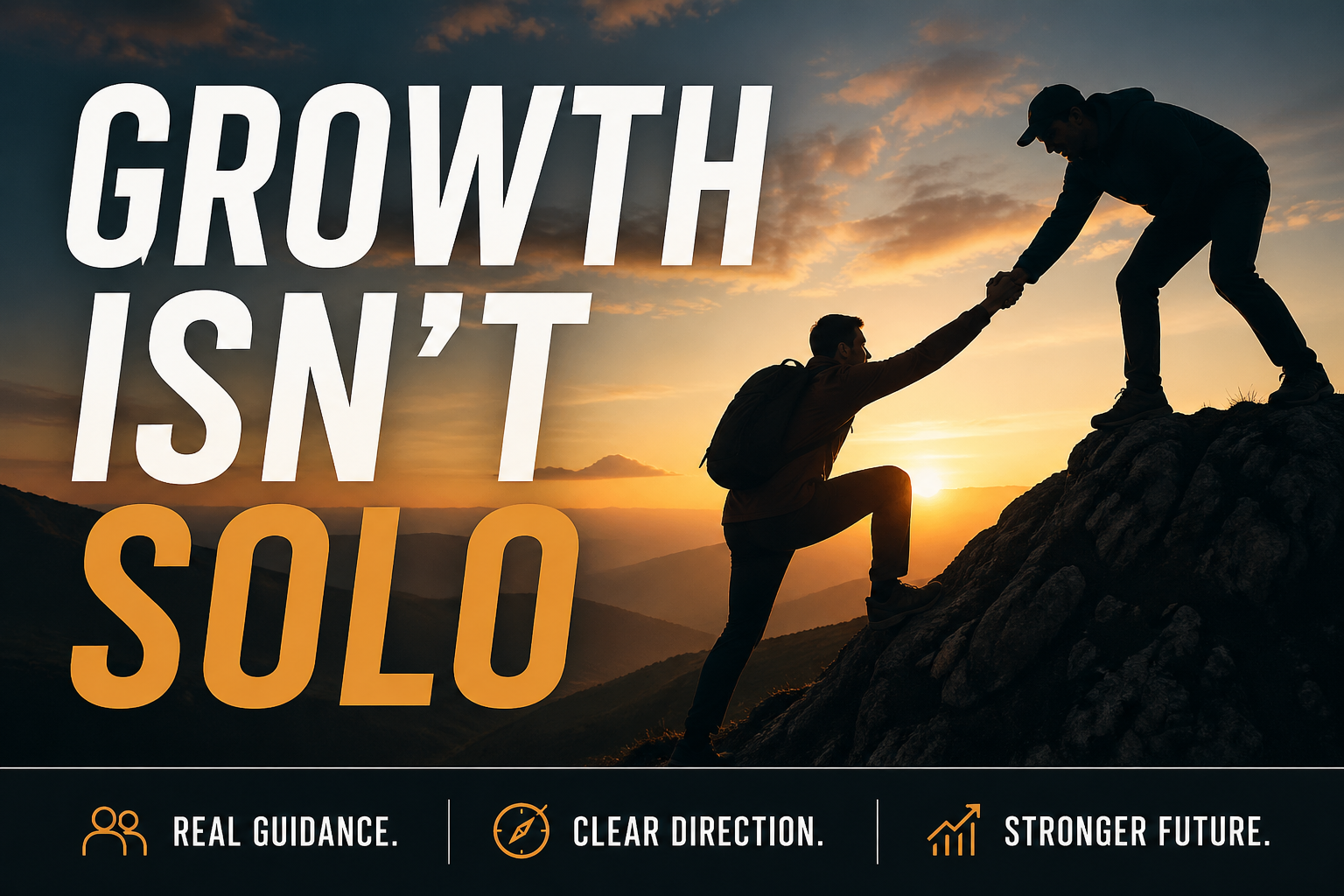
Growth isn’t solo.
Too often, pride gets in the way. We think we’re supposed to have all the answers or figure it out on our own. In reality, the people who move forward are the ones willing to learn from someone who’s been through it.
I’ve been through the college interview gauntlet more than a few times—as a head coach, as an administrator, and as a candidate. And beyond that, I’ve made just about every mistake under the sun—as an athlete, as a coach, as an Athletic Director, and as a parent. There’s a rhythm to this profession. There are expectations that aren’t always said out loud. There are mistakes you can avoid if you have the right perspective going in.
That’s where mentorship changes everything.
And yes—perspective matters. But what most people who reach out to me actually gain goes beyond that.
They gain efficiency.
They gain direction, tools, and real-world advice that allows them to think clearly and move with purpose. Instead of adding more to an already demanding process, we simplify it. We build routines. We create structure. We eliminate wasted energy and thoughts.
Because most people aren’t struggling with effort—they’re struggling with where to put that effort.
When you have structure, you don’t just work harder—you work smarter. You take time and stress off your plate instead of piling more on.
If you’re serious about finding a mentor—and getting something out of it—it starts with three simple steps.
- Make the first move.
Don’t wait to be chosen. Send the message. Ask for the conversation. - Lead with humility, not ego.
You don’t need all the answers—just a willingness to listen and grow. - Stay consistent.
One conversation won’t change everything. Check in, apply what you learn, and keep building.
I’m grateful for the mentors I’ve had—people I can call when I need perspective or direction. Those conversations have shaped how I think and how I lead.
And the more I do this, the more I believe this: Everyone needs that.
Students. Parents. Teachers and Coaches. Athletic Directors. College Presidents.
At every level, there’s value in having someone you trust—someone who can challenge you, support you, and help you move forward with purpose.
So if you’re working toward your next step—whatever that looks like—don’t go at it alone.
Reach out to someone you respect. Start the conversation.
Or, if you’re ready to be intentional about your growth and want direction, structure, and a way to simplify the process—I’m here.
Head over to coachmattrogers.com and set up a coaching session.
Sometimes the right conversation is all it takes to get you moving in the right direction.