Give me six hours to chop down a tree and I will spend the first four sharpening the axe. -Abraham Lincoln
There’s a reason we hear so many leaders talk about the importance of making your bed each morning.
It’s not really about the bed.
It’s about starting your day by accomplishing something. It’s about creating immediate momentum. And at the end of the day, no matter how chaotic life became, you walk back into a clean room and feel good knowing at least one important task was completed.
That feeling matters more than people realize.
I think a lot of leaders today struggle because they spend their days reacting instead of intentionally organizing what absolutely needs to get done. Meetings get added. Emails pile up. Phones ring constantly. Unexpected problems appear every day. By the end of the week, many leaders feel exhausted but still feel like they didn’t accomplish the things that mattered most.
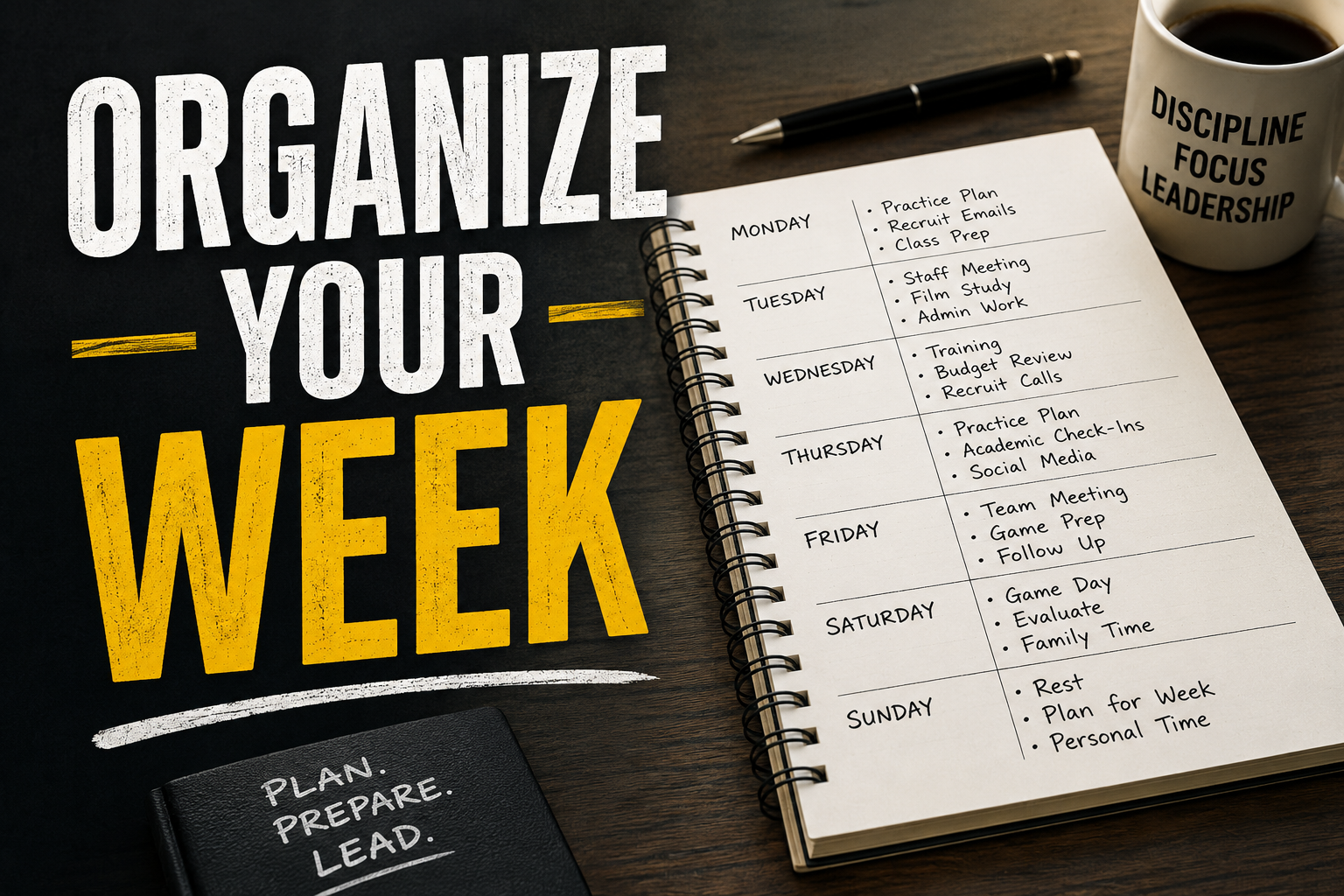
That’s why one of the things I find myself doing every month is sitting down with a notebook or blank document and writing out Monday through Sunday. Under each day, I list the responsibilities that absolutely must get done that day. But the second part is just as important: I take those responsibilities and block out time on my calendar to complete them. Because if I don’t intentionally protect that time, I already know something else will eventually fill that calendar slot.
That’s how most leaders slowly lose control of their priorities.
The week starts with good intentions, but without structure, distractions eventually take over.
For example, if you’re a college coach, can you create a daily 30-minute calendar block dedicated strictly to responding to recruit emails? Can you also create one weekday evening “Power Hour” each week where your only focus is calling ten recruits on your recruiting board while they are more likely to be home and available to talk?
Those small systems create consistency.
If you’re a high school coach, can you create a simple practice-planning template so you can dedicate 30 focused minutes each day to building your practice agenda before you walk into practice? Coaches spend too much time showing up still trying to figure out what practice is going to look like. Preparation changes leadership. If you need practice template ideas, email me and I’ll gladly send you a few options.
And for athletic directors, can you create a monthly expectations rubric for your coaches, so everyone clearly understands the standards, priorities, and goals attached to their position? Then when you sit down for monthly one-on-one meetings, coaches are prepared to discuss progress, achievements, challenges, and goals for the next month instead of feeling caught off guard.
None of these ideas are revolutionary.
They’re simply intentional.
That’s the point.
We constantly tell athletes and students that routines create habits and habits create consistency. We teach discipline, accountability, and preparation every single day.
The question is whether we are applying those same principles to our own leadership.
Because leadership becomes healthier when priorities become organized.
At the end of the day, most people don’t need more hours in the week. They simply need a clearer understanding of what absolutely must get done each day and the discipline to protect time for those priorities before the week starts controlling them.
And when those priorities consistently get handled, leadership starts feeling a whole lot less overwhelming.
If you’re looking for ways to bring more efficiency, structure, and intentional leadership to your team, staff, or athletic department, reach out and schedule a coaching or discovery session at coachmattrogers.com. Sometimes the biggest breakthroughs come from simply creating better systems around the work you are already doing.