Money grows on the tree of persistence. —Japanese proverb
One of the biggest misconceptions in college recruiting is that the process is all about finding a roster spot.
It’s not.
The reality is that for most families, the biggest challenge isn’t getting admitted to a college or even getting recruited by one. It’s figuring out how to pay for it.
Over the years, I’ve worked with thousands of recruiting families. I’ve watched student-athletes earn roster spots at outstanding colleges only to discover that the financial package made attendance nearly impossible. I’ve also watched families eliminate schools too early because they assumed the price tag was out of reach, only to learn later that substantial aid was available.
The good news is that many of the most common financial aid mistakes are avoidable. Here are ten mistakes every recruit and family should work to avoid during the recruiting process.
1. Waiting Until Senior Year to Discuss Cost
Far too many families spend years discussing athletic opportunities and never have an honest conversation about what they can realistically afford.
Before building a college list, determine what your family can comfortably contribute each year. Knowing that number early will help guide your search and prevent heartbreak later.
A dream school isn’t much of a dream if attending it creates financial stress for years to come.
2. Assuming Athletic Scholarships Are Common
Most college athletes are not receiving full athletic scholarships.
In fact, many recruits receive partial athletic aid—or no athletic aid at all. Depending on the sport, division, and institution, athletic money may be extremely limited.
The families who navigate recruiting successfully understand that athletic scholarships are often just one piece of a much larger financial aid puzzle.
3. Ignoring Academic Scholarships
This may be the biggest mistake I see.
Many recruits spend thousands of hours developing their athletic skills while paying little attention to the academic side of the equation.
A higher GPA, stronger coursework, and improved test scores can often generate more scholarship money than athletic ability alone.
The classroom may be your most valuable scholarship opportunity.
4. Falling in Love With a School Before Seeing the Financial Package
It happens every year.
A recruit visits campus, loves the coaches, falls in love with the facilities, and mentally commits before understanding the actual cost.
Emotions are an important part of the college decision, but they should never replace financial reality.
Always wait until you have the complete financial picture before making a final decision.
5. Missing Financial Aid Deadlines
Deadlines matter.
Many institutional scholarships, grants, and aid programs are awarded on a first-come, first-served basis or have strict submission deadlines.
Families who wait until the last minute often discover they have unintentionally left money on the table.
Create a calendar. Track deadlines. Stay organized.
6. Assuming Division III Means No Scholarship Opportunities
This myth continues to mislead families every year.
While Division III schools do not offer athletic scholarships, many provide generous academic scholarships, institutional grants, leadership awards, need-based aid, and other financial assistance.
In some cases, a Division III package can be more affordable than a scholarship offer from another division.
Never assume. Always ask.
7. Failing to Apply for Local Scholarships
Many families spend enormous amounts of time pursuing large national scholarships while ignoring local opportunities.
Community foundations, civic organizations, local businesses, churches, service clubs, and alumni groups often provide scholarships with significantly smaller applicant pools.
A handful of local scholarships can quickly add up.
8. Not Asking Coaches About Financial Aid
College coaches may not be financial aid experts, but they often have a good understanding of how aid works at their institution.
Ask questions.
What percentage of athletes receive aid?
How does academic aid stack with athletic aid?
What GPA thresholds unlock additional scholarship opportunities?
The more information you gather, the better decisions you’ll make.
9. Comparing Sticker Price Instead of Net Price
One of the most expensive mistakes families make is focusing solely on published tuition rates.
A private college with a $70,000 sticker price may actually cost less than a public university with a $30,000 sticker price after grants, scholarships, and institutional aid are applied.
Don’t compare advertised costs.
Compare actual costs.
10. Believing Financial Aid Is Someone Else’s Responsibility
At the end of the day, no coach, counselor, or financial aid office will care more about your financial future than you do.
The families who find the best opportunities are the ones who take ownership of the process.
They ask questions.
They research options.
They stay organized.
They pursue every scholarship opportunity available.
And they refuse to assume anything.
The recruiting process belongs to them.
Final Thoughts
The recruiting process isn’t just about finding a school that wants you to play. It’s about finding a school that fits academically, socially, athletically, and financially.
Too many families spend all of their energy chasing offers and not enough time understanding how those offers fit into the bigger picture.
The good news is that financial aid is not a mystery. The more informed and proactive you become, the more opportunities you’ll create for yourself and your family.
If you’d like help building a recruiting and financial aid strategy that works for your situation, visit coachmattrogers.com to schedule a free recruiting strategy session.
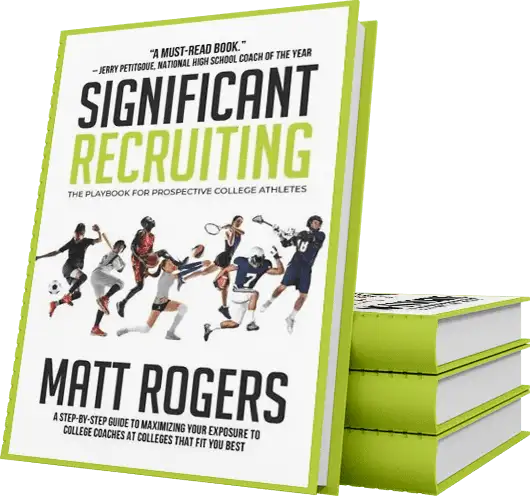
And if you’re serious about taking control of your recruiting journey, check out my book, Significant Recruiting: The Playbook for Prospective College Athletes. Chapter 12 takes a much deeper dive into financial aid, scholarships, leverage, and the strategies families can use to reduce college costs while expanding opportunities.
You can learn more about the book at CoachMattRogers.com.
The more you understand the financial side of recruiting, the more power you’ll have to make a decision that benefits not only your athletic career, but your future as well.