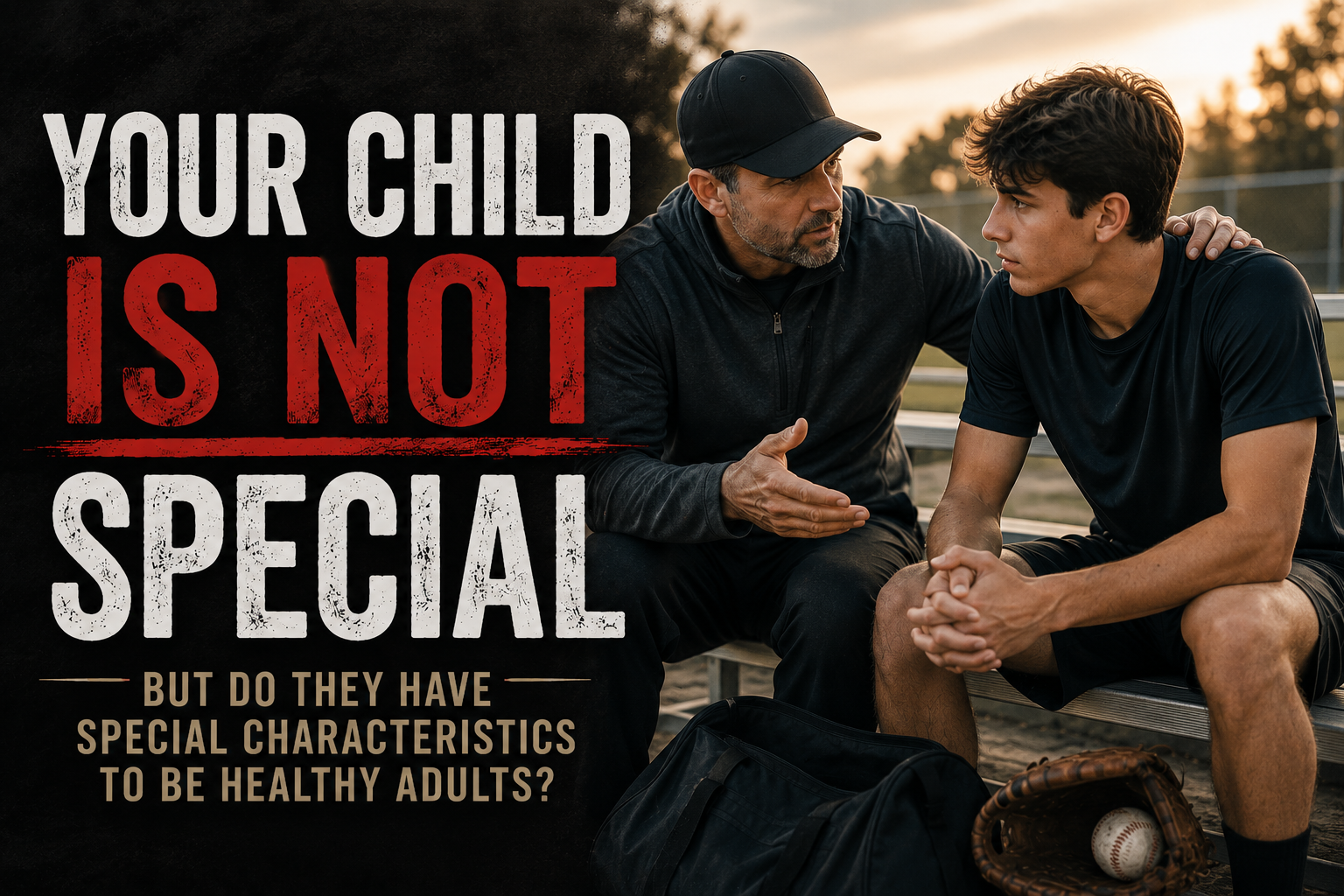
“Don’t handicap your children by making their lives easy.” Robert A. Heinlein
I love my two kids, and I’m happy to say that my wife and I have raised two good kids. Both are honors students, both are respectful to those they know well, as much as they are to complete strangers, and both have a healthy balance of school, friendships, sports and social life. I’m proud of them, and I’m proud to be their father.
They’re also far from perfect. They can forget their manners. They can be lazy. They can leave things lying around the house and somehow become completely incapable of seeing them. And they can absolutely forget how good they have it—especially when they see friends who have more, get more or are given freedoms that we haven’t given them.
Sometimes their perspective needs a reset. They need to be reminded that another kid having a nicer car, a later curfew, fewer chores or parents who say “yes” more often doesn’t mean they are somehow getting cheated. Gratitude, perspective and responsibility aren’t things kids magically develop. We have to teach them, model them and, sometimes, we have to provide a well-deserved kick in the pants.
With that said, I’m fairly certain neither of my kids will be a professional athlete, President of the United States or a world-class heart surgeon when they get older. Neither is driven by those types of careers nor the work and responsibility that comes with them. We are raising them to be healthy, practical and responsible adults, knowing that a meaningful life doesn’t require wealth, status or recognition.
I think, for the most part, most parents that I meet and work with would tell me a similar story about their kids.
And then there are the rest…
I can already expect that I will get some emails filled with vitriol from those who choose to only read the title of this essay, and I’m okay with that because there are families that need to hear it, no matter the consequences. I say this because I still see many parents who are driven by the success of their child:
Valedictorian ✓
All-State ✓
Full-ride scholarship ✓
Ivy League education ✓
Fortune 500 internship ✓
Six-figure salary at 25 ✓
Drafted professional athlete ✓
I’m sorry, but that still doesn’t mean your child is special.
Your child just might have special qualities. They may throw a baseball 100 mph. They may have a 40-inch vertical leap. They may score a perfect SAT on their first try without studying.
Fantastic!
Those are gifts. They are accomplishments worth celebrating. But none of them entitles your child to anything. They don’t automatically deserve to start, receive more playing time, gain admission to a particular college, earn more recognition than someone else or avoid consequences when they fail to meet expected standards. Their accomplishments may open doors and create opportunities, but what they do next—and how they conduct themselves—determines whether they’ve earned the right to keep those doors open.
And this is where I think we sometimes get the word special wrong.
After spending much of my adult life coaching, recruiting, hiring and working with young people, I can tell you what actually makes a young person stand out to me—and it has very little to do with how hard they throw a baseball, how high they jump or what score they earned on a standardized test.
Want to impress a college coach or an admissions representative?
Be polite.
Be humble.
Work hard.
Be accountable when you screw up.
Be responsible enough to do what you said you were going to do.
Have empathy for people who are struggling.
Be able to answer questions without looking for mom and dad to answer for you.
Look people in the eye. Say thank you. Ask good questions. Listen when someone else is speaking. Treat the person cleaning the locker room with the same respect you give the head coach.
And if you are an athlete, care more about whether your team succeeds than whether you personally get the recognition.
If I genuinely see, hear and feel those characteristics, I have a kid with special characteristics on my hands that I am proud to have in my house, on my team or enrolled at my college.
I want my kids to be challenged. I want them to hear “no.” I want them to receive honest criticism. I want them to experience consequences when they make poor decisions. I want coaches, teachers and other adults in their lives to hold them accountable when their effort or behavior isn’t good enough.
Not because I want life to be hard for them.
Because I want them to be ready when life is hard.
They are going to fail. They are going to get rejected. Someone else is going to get the job. Someone else is going to start. A professor may give them a grade they don’t like. A boss will eventually criticize them. A relationship may end. Life is going to hurt sometimes.
I believe that our job as parents isn’t to make sure none of those things ever happen. Our job is to prepare our kids for when they do.
I’m certainly not suggesting that kids should be abused, humiliated or pushed to the point of harm. But they need opportunities to struggle, fail, adjust and discover what they are capable of without Mom and Dad immediately fixing everything for them.
Because someday they are going to face something much bigger than a bad grade, a tough coach or sitting on the bench. In that moment, I want my kids to be able to look back at everything they’ve already overcome and tell themselves:
I can handle this. I’ve been through hard things before. This hurts. This sucks. But it doesn’t define me. It’s not going to define my future. It’s something I have to get through right now—and I know I can.
Of course my kids are special to me. I love them unconditionally, and nothing they accomplish—or fail to accomplish—will ever change that.
But I don’t need the rest of the world to believe they’re special.
I want my kids to show the world what makes them special.
Through their humility. Their work ethic. Their accountability. Their empathy. Their resilience. The way they treat people. The way they respond when things don’t go their way. And their willingness to care about the success of the people around them as much as they care about their own.
Those are qualities worth developing.
Those are qualities coaches, colleges and employers are looking for.
And those are the qualities that can turn a good kid into a pretty special adult.
If you’re a parent, coach or athletics leader trying to help young people become more than talented athletes and successful students, that’s the work I care deeply about. I write, speak, coach and consult about building healthier athletes, stronger coaches and better programs. Continue the conversation and explore more resources at coachmattrogers.com.