“We have to continually be jumping off cliffs and developing our wings on the way down.”
― Kurt Vonnegut, If This Isn’t Nice, What Is?: Advice for the Young
Recruits these days get buried under advice. Every social media account, recruiting service, coach, parent, teammate, and former player seems to have an opinion on what you should do next.
Because of that, I thought it might be helpful to offer a few ideas that fall a little outside the traditional recruiting playbook.
Before I do, understand this: regardless of what strategy you use, the key is always authenticity.
The recruits who stand out are rarely the ones sending the most emails. They are the ones whose communication feels personal, genuine, and intentional. If you’re sending the exact same message to 50 college coaches, don’t be surprised if your results look exactly like everyone else’s.
College coaches want to know that you’re interested in their program, not just any program.
With that in mind, here are three recruiting strategies that very few recruits are willing to try—and that alone may make them worth your consideration.
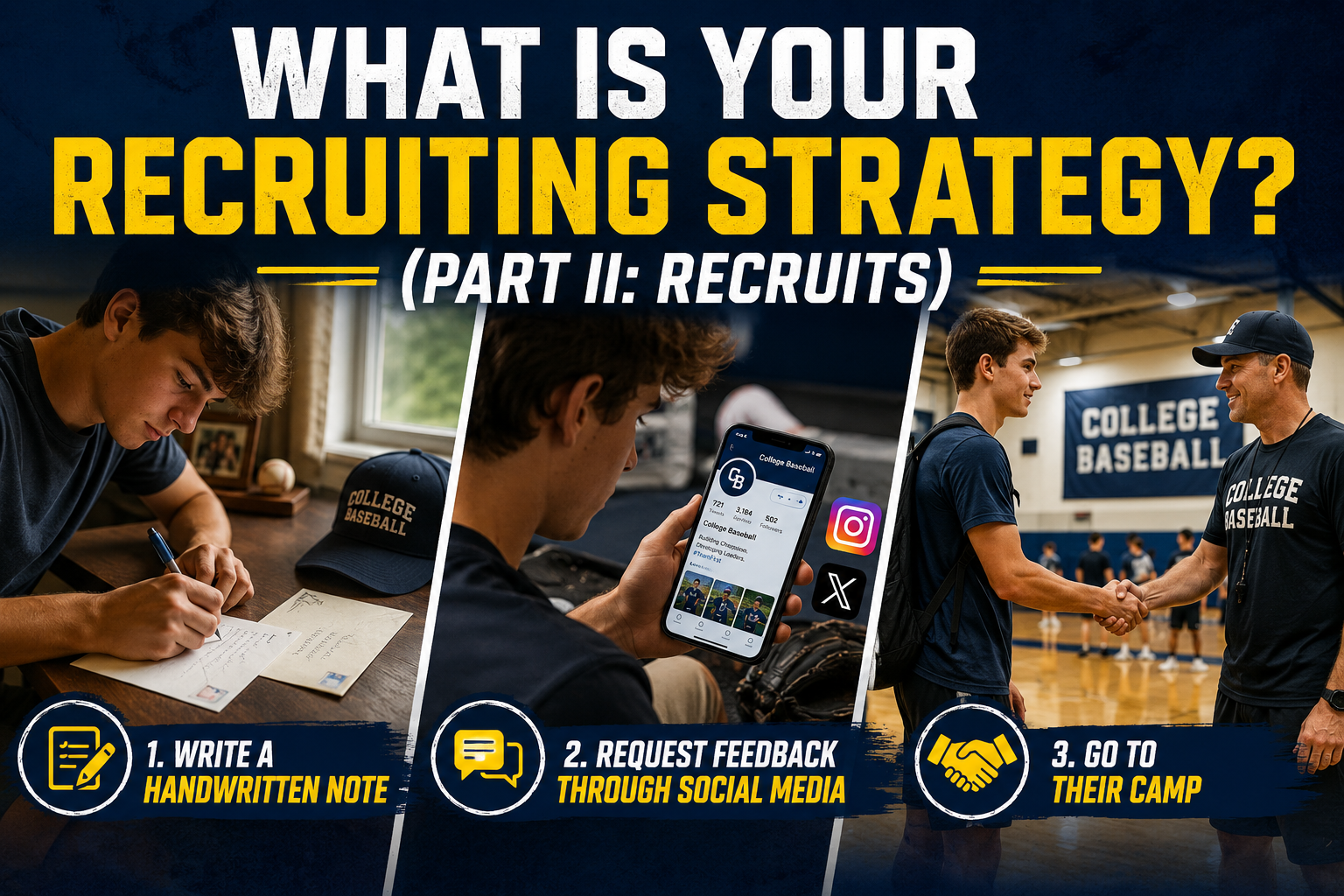
1. Write a Handwritten Note
My family has reached the point where we’re lucky if we check the mailbox once a week.
Why?
Because 99% of what’s in there is marketing, advertisements, and junk mail.
But every once in a while, there’s something different—a handwritten envelope.
And suddenly, you can’t wait to open it.
Why? Because you know it’s personal.
Someone took the time to think about you, write the note, address the envelope, buy the stamp, and mail it. In today’s world, that level of effort stands out.
The same principle applies to college coaches.
Your note doesn’t have to be four pages long. A few thoughtful sentences explaining your interest in the school and program are enough. Introduce yourself. Tell them why you’re interested. Ask if they would be willing to schedule a conversation or provide some feedback on your game.
The rarity of receiving a handwritten letter may be enough to earn a response, a phone call, or even a handwritten note back.
Just make sure you include your phone number, email address, graduation year, and any links in an additional email that will help them learn more about you.
2. Request Feedback Through Social Media
Connecting with college coaches through Instagram and X has become common, but most recruits don’t fully take advantage of that access.
Before a coach can seriously evaluate you, they generally need four things:
- Quality film that demonstrates your athletic ability and skill set.
- Your academic information, including grades and transcripts.
- Your competition schedule so they know when and where they can watch you play.
- Your contact information.
That’s why every recruit should have a recruiting profile that gives coaches one-click access to all four.
When you reach out through social media, make it easy for coaches to evaluate you.
More importantly, never ask a coach to recruit you.
Instead, ask them if they would be willing to evaluate you.
Ask for feedback.
Ask what they like.
Ask what areas need improvement.
Ask if they would be willing to schedule a phone call or Zoom conversation.
Most recruits ask for opportunities.
The best recruits ask for feedback.
And feedback often creates opportunities.
3. Attend Their Camp—But Do Your Homework First
I realize this advice comes with a cost.
By the time you pay camp registration, travel, lodging, meals, and other expenses, attending a college camp can become a significant investment.
Because of that, I never encourage families to attend camps simply because a college offers one.
Do your homework first.
Before registering, send an email to every coach on that staff.
Let them know you’re considering attending camp, but before your family makes that investment, you would appreciate their feedback on your film.
Ask questions such as:
- Do I have the potential to compete at your level?
- Am I someone you could see fitting into your program in the future?
- What skills should I focus on developing to become a stronger fit for your program?
The answers to those questions can save you a lot of time and money.
If the coaches respond positively and you decide to attend, don’t waste the opportunity.
Introduce yourself as soon as you arrive.
Remind them about your email exchange.
Ask them to keep an eye on you throughout the camp.
Invite constructive criticism.
Ask them to help you understand what you do well, where you need to improve, and what your next steps should be after camp ends.
Too many recruits attend camps hoping to be discovered.
The better approach is to arrive with a purpose and leave with a plan.
Final Thoughts
Emailing and calling college coaches will always be the foundation of a strong recruiting strategy.
But if you’re willing to go a step further—write the handwritten note, ask for feedback through social media, and be intentional about the camps you attend—you may separate yourself from the thousands of recruits doing exactly what everyone else is doing.
Sometimes the smallest actions create the biggest opportunities.
And sometimes the coach who receives that letter, that message, or that thoughtful question ends up being the coach who changes your life.