“Sometimes daring to ask the question changes the whole story.” – Mad Hatter, Alice in Wonderland
One of the biggest mistakes recruits make during the recruiting process is believing their job is simply to answer questions. They sit quietly on calls, nod during campus visits, and wait for coaches to decide whether they’re “good enough.”
That mindset puts all the power in the hands of the college coach.
In Significant Recruiting, I talk often about ownership. Recruits who learn to own their process usually make better long-term decisions because they gather better information. They stop looking only at the schools that immediately catch their eye and begin evaluating the schools that truly fit their academic goals, social needs, athletic development, leadership opportunities, and long-term future beyond sports.
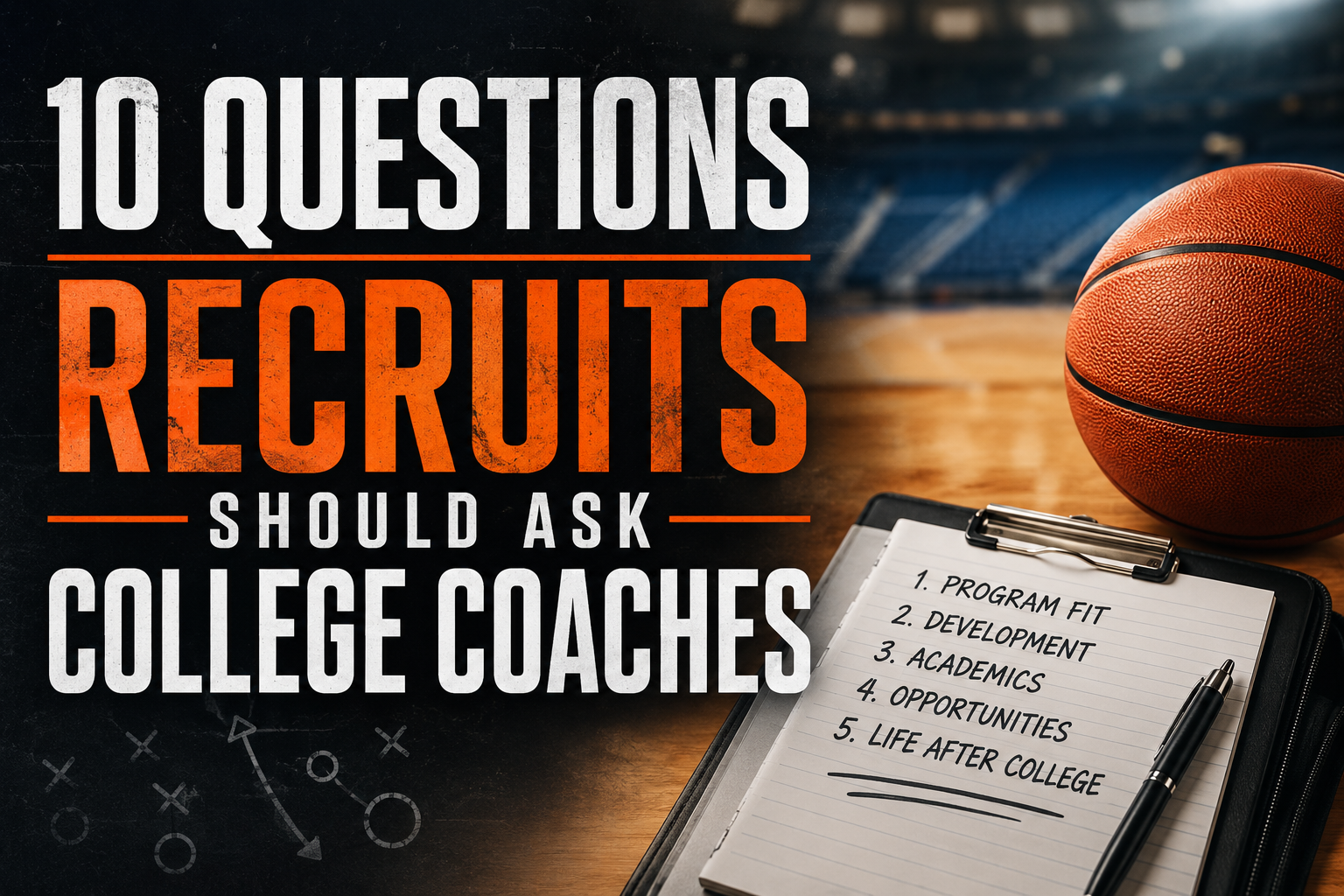
Here are 10 important questions every recruit should ask college coaches during the recruiting process.
1. What Type of Player Thrives in Your Program?
This question tells you far more than simply asking about playing time or scholarships.
Listen carefully to how the coach describes successful athletes in their program. Are they emphasizing toughness? Discipline? Communication? Independence? High basketball IQ? Leadership? Competitiveness? Academic commitment?
The answer helps you determine whether the environment matches who you are — or who you want to become.
2. What Does a Typical Day Look Like for Your Athletes?
A college athlete’s daily schedule can feel very different from high school life. Ask about:
- Practice schedules
- Lifting and conditioning
- Study hall expectations
- Travel demands
- Class scheduling
- Team meetings
- Off-season expectations
Many recruits focus heavily on game day without understanding what the other 95% of the experience actually looks like.
3. How Do You Support Athletes Beyond Their Sport?
College athletics should prepare students for life, not just competition. Ask coaches how they support:
- Academic success
- Mental health
- Career development
- Internships
- Leadership growth
- Networking opportunities
The best programs develop people, not just athletes.
4. What Happens When Players Struggle?
Every athlete faces adversity. Maybe it’s injury. Maybe it’s homesickness. Maybe it’s a confidence issue. Maybe it’s not playing as much as expected.
A coach’s answer to this question reveals a great deal about program culture and emotional intelligence. Listen for accountability balanced with support and communication.
5. What Are Your Expectations for Communication?
Miscommunication ruins many recruiting relationships and college experiences. Ask:
- How do players communicate concerns?
- Are athletes encouraged to meet with coaches?
- How are difficult conversations handled?
- What role do parents play after commitment?
Clear communication standards create healthier programs.
6. What Do You Love Most About Coaching Here?
This is one of my favorite questions because it often produces the most honest answer of the conversation.
When coaches light up talking about their athletes, campus community, administration, or culture, you learn what they truly value.
Passion is difficult to fake.
7. What Concerns Would You Have About Me as a Recruit?
This question takes confidence, but it can be incredibly valuable. It allows recruits to:
- Address concerns directly
- Show maturity
- Gain clarity
- Understand where they stand
Coaches appreciate recruits who can handle honest feedback.
8. How Does Your Program Help Athletes Transition After Graduation?
A four-year decision should not be made with only four years in mind. Ask about:
- Alumni connections
- Career placement
- Graduate school success
- Networking opportunities
- Mentorship
The right college fit should still benefit you long after your final game.
9. What Makes Athletes Want to Stay Here?
Retention matters.
In today’s transfer portal era, this question can uncover a lot about team culture and player satisfaction. Coaches who talk about relationships, development, trust, and growth usually have healthier environments than programs that only discuss winning.
10. If You Were in My Position, What Would You Be Looking For in a College?
This question often changes the tone of the conversation completely. It invites the coach to stop recruiting for a moment and simply give advice.
Some of the best recruiting conversations happen when coaches stop talking like salespeople and start talking like mentors.
Final Thoughts
The recruiting process should never feel like begging for approval.
The right college fit is about relationships, communication, opportunity, development, and environment. Recruits who ask thoughtful questions usually make more informed decisions because they learn how to evaluate a program beyond the surface.
Remember this:
A college coach is not just offering you a roster spot.
They are offering you an environment.
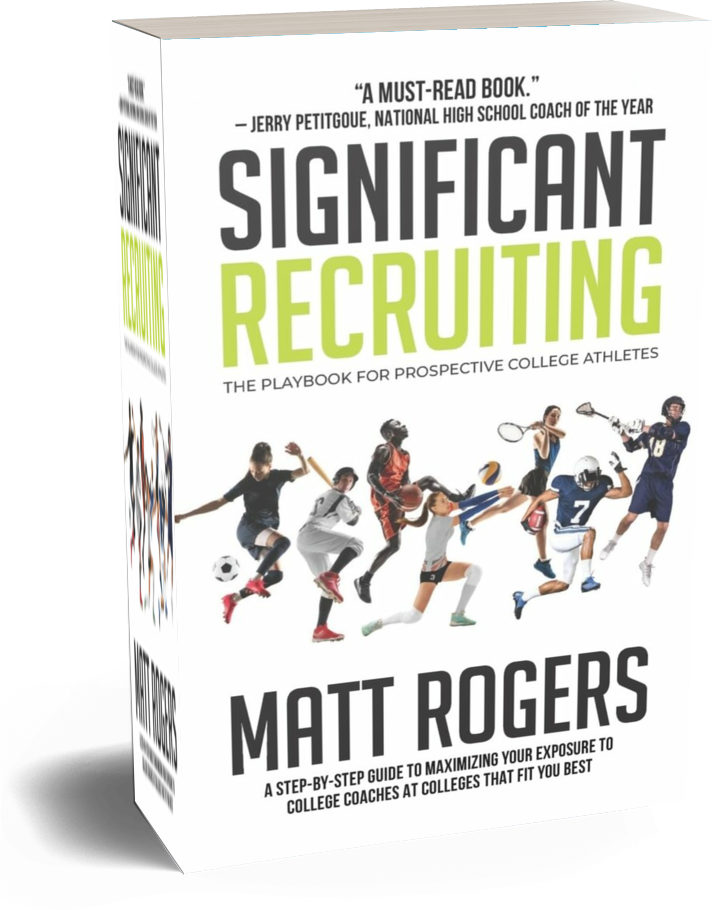
And if you want more tools to help simplify the recruiting process, check out my book Significant Recruiting: The Playbook for Prospective College Athletes and the Recruit’s Journal series at CoachMattRogers.com